
A reimagined García Lorca piece que brinda un apapacho al corazón.
Remember, dear reader, that I had not been to the LATC or even Los Angeles to review theatre since the Encuentro in 2024? During the Encuentro, the play Carlota: Alhajero de Secretos was part of the programming, but I did not catch it while I was there. The production by San José-based Teatro Alebrijes is back with a short run until May 24, and I am happy I could finally see it.
The Spanish poet and playwright Federico García Lorca was a trailblazer with his surrealist style while uplifting his homeland, Granada, and the southern Spanish Autonomous Community of Andalucía. It was interesting to see Lorca’s reimagined The House of Bernarda Alba through the lens of Carlota: Alhajero de Secretos, written by Rodrigo García and Ugho Badú.
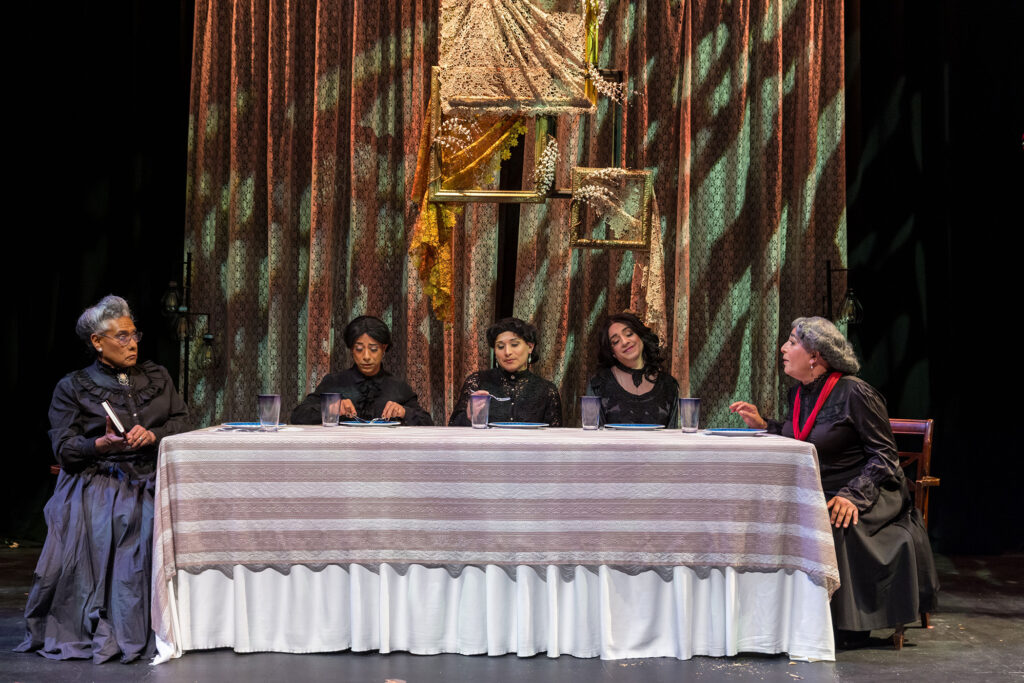
An hacienda type setting with the remains of a rich family ran tightly by its matriarch Carlota (Sergio Dávila), who is obsessed with good manners and lady like appearances; a widow who also tended to her father before his passing, Carlota is tremendously strict with her three daughters Mari Fer (Janvier Berber-Acosta), Mari Tere (Ugho Badú), and Mari Pepa (Adrián Campos Arenas). The sisters know all the crochet techniques and tableside manners while being practically kept from the outside world and its temptations. Their nanny, Prudencia (Carolina Perez), cares for the young ladies who are eager to explore, have suitors, and learn everything there is to know about life.
Soledad (Jose Fidel Martinez), Carlota’s best friend, is an unmarried older woman who helps with the girls and the house errands. When Prudencia tells Carlota she needs help with all the upkeep, she allows Carlota to hire Consuelo (Yatzil Ruiz) part-time. A town funeral will bring more than prayers and rosaries, as the sisters’ rivalry for a suitor. Carlota will not have it, but her sister Dolores (Ricardo Cortés), who’s come back after decades of travel, will also have a say.
Leigh Henderson’s design brought the essence of an old Casona to the stage through a large dining table and a side medium table, simulating the kitchen area, with all the necessary props, from wooden spoons to clay bowls, and embroidered table settings. Noemi Barrera’s lighting had the right dim for the precise moments, adding to the suspense.
Rodrigo García directs the piece that is fully in Spanish with subtitles in English. Having six of the eight women characters played by men is one of the various gems in this production, as the makeup and wigs are on point, as well as the wardrobe, also designed by García, with the mom, friend, and daughters in all black, while the nanny and housekeeper wore more vibrant colors, which also adds to the essence of the constricting Carlota.
The trace presented at the LATC is semi-narrow and horizontal. The blockage was handled well with no hiccups with the set or props amongst the actors.
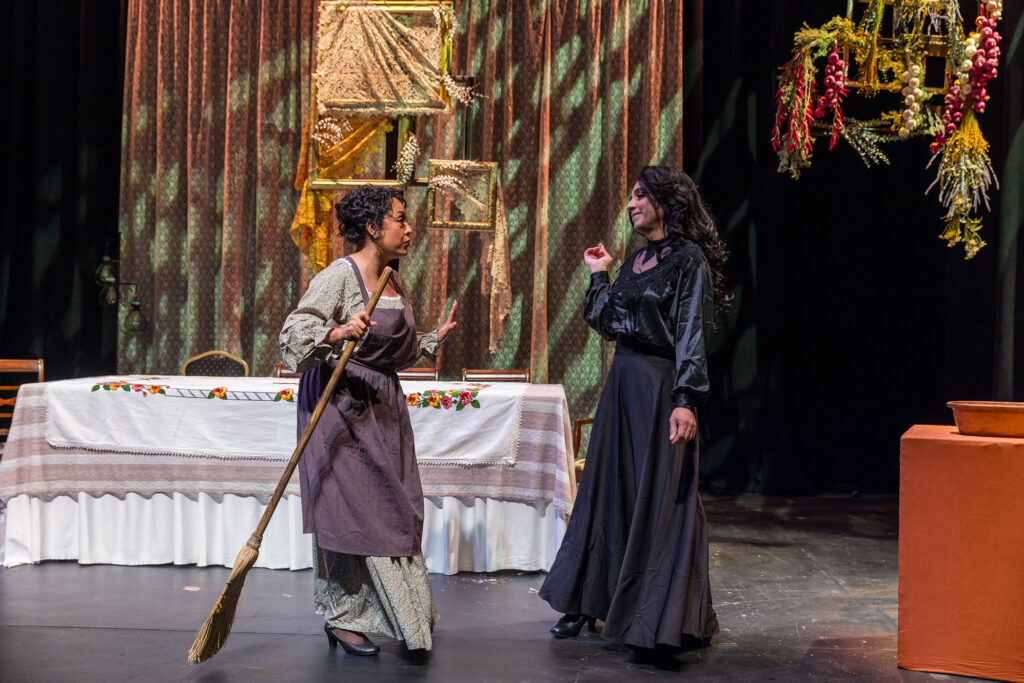
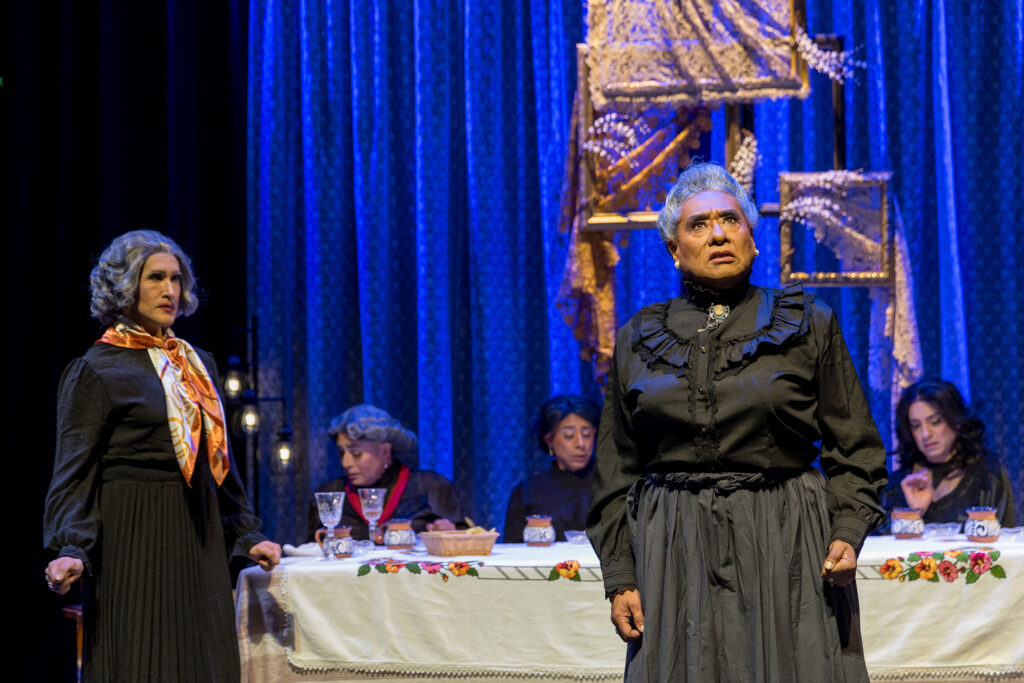
Sergio Dávila and Ugho Badú. Photo by Grettel Cortes Photography
Janvier Berber-Acosta, Ugho Badú, and Adrián Campos Arenas truly convey the bond of sisterhood and its setbacks. Each actor brings unique traits, with the three ladies shining through delicate mannerisms, side-eye, and tenderness.
Carolina morphed into the elder, wiped out Prudencia, giving a soft kindness, musicality, and good histrionic play with the rest of the cast, especially Yatzil Ruiz as Consuelo, who is vibrant, lively, and sweet.
Sergio Dávila is a true force as the conservative mother. I can honestly tell you, dear reader, that Dávila’s Carlota reminded me of my grandmother when I was little. The attitude, the restraint, it is all there, making it palpable…real. Then, Jose Fidel, as Soledad, reminded me of my aunt (lol) because there is always that yin-yang dynamic amongst the tías… or at least, nine times out of ten. Dolores is that sibling, and Ricardo Cortés brought the sass and carefree attitude accordingly.
I truly think that the best way to present this is in Spanish. García and Badú leaned into Lorca’s poetry with good character development, culminating in a bang of an ending.
And I cannot, not say something in Spanish:
Realmente entre los refranes, el ritmo poético, y el español, esta obra es, en definitiva, un apapacho para el corazón. Bravo por esta compañía que presenta teatro en español, honrando, cuidando y respetando el idioma como es debido.
The Stage Managers for this production are May Fei for the LATC and Janvier Berber-Acosta for Alebrijes.
If people are reading the subtitles, I do recommend sitting farther back, as it is more comfortable to follow what is happening on stage and with the projected subtitles.